I still remember the first time I saw a 605 number pop up on my caller ID. It was back in 2019, and I was working as a freelance writer trying to land a client in the Midwest. The number looked unfamiliar, and honestly, I almost let it go to voicemail. Something about those three digits caught my attention, though, probably because I had never seen them before in my life. I picked up, and on the other end was a ranch owner from Pierre, South Dakota, looking for someone to help write content for his tourism website. That call changed my perspective on the business potential in what many people call “flyover country.” That was my introduction to the 605 area code. Since then, I have learned that this seemingly simple set of numbers carries a fascinating story about American telecommunications history, geography, and the unique character of South Dakota itself.
What is the 605 Area Code and Where is it Located?
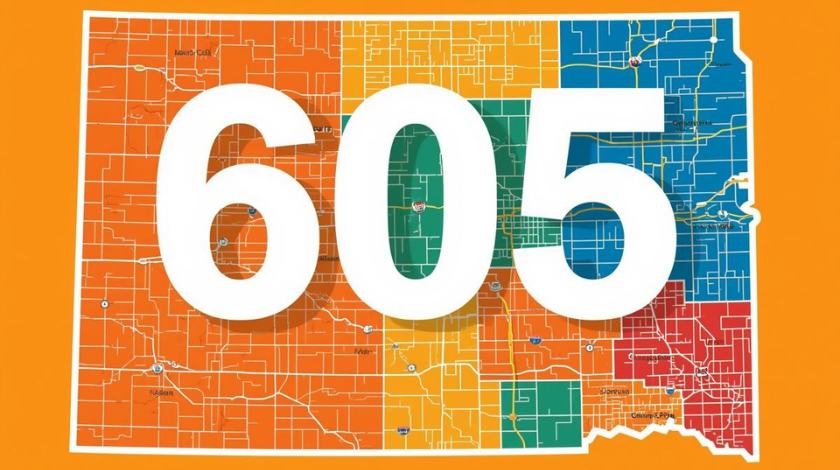
The 605 area code serves as the telephone area code for the entire state of South Dakota in the United States. Unlike most states that have multiple area codes due to population growth and increased demand for phone numbers, South Dakota has maintained just one area code since the very beginning of the modern telephone numbering system. This makes 605 one of the few remaining original area codes that still covers an entire state without any overlays or splits. When you see a phone number beginning with 605, you immediately know that the person or business is located somewhere within South Dakota’s borders, whether they are in a bustling city or a remote prairie town.
The geographic coverage is truly comprehensive. The 605 area code stretches from the eastern border with Minnesota all the way to the western edge, where South Dakota meets Wyoming and Montana. It covers every single one of South Dakota’s 66 counties, making it one of the largest area code territories in the country by land area. This massive coverage area includes everything from the rolling prairies of the eastern part of the state to the rugged Black Hills in the west. The area code encompasses approximately 900,000 residents, though the population density varies dramatically between urban centers and rural communities.
Major Cities and Communities in the 605 Area Code
When people think about South Dakota, they often picture vast empty spaces, but the 605 area code actually serves several significant population centers that drive the state’s economy and culture. Sioux Falls is the largest city in the 605 area code and serves as the state’s economic engine. With a metro area population of around 200,000, Sioux Falls has become a regional hub for healthcare, finance, and retail. Major employers such as Sanford Health and Citibank have established significant operations there, and the city continues to experience steady year-over-year growth.
On the western side of the state, Rapid City serves as the gateway to the Black Hills and handles the tourism influx that comes with proximity to Mount Rushmore, the Crazy Horse Memorial, and the Badlands. The city has a distinct character compared to Sioux Falls, with a more rugged, outdoor-focused lifestyle that reflects its proximity to national parks and monuments. Other significant cities within the 605 area code include Aberdeen in the northeast, an agricultural hub; Brookings, home to South Dakota State University; Watertown, known for its manufacturing and retail sectors; and Pierre, the state capital, which sits at the geographic center of South Dakota.
What makes the 605 area code particularly interesting is how it connects these urban centers with tiny communities with populations of just a few hundred people. Towns like Faith, South Dakota, with fewer than 500 residents, share the same area code as Sioux Falls. This creates a unique telecommunications equality in which the rancher in remote western South Dakota has the same area code as the banker in downtown Sioux Falls. In an era where many states have fragmented into multiple area codes that often reflect socioeconomic divisions, the 605 area code maintains a sense of statewide unity that feels increasingly rare.
The History Behind 605: Origins in the 1947 Numbering Plan
To understand why South Dakota has only one area code, we need to travel back to 1947, when the North American Numbering Plan was first established. This was a revolutionary moment in telecommunications history when AT&T and the Bell System worked with independent telephone companies to create a standardized system for direct dialing across North America. Before this system, making a long-distance call required operator assistance and could take considerable time to connect. The new numbering plan introduced three-digit area codes to route calls efficiently across the continent.
During this 1947 reorganization, South Dakota received the 605 designation. At that time, area codes were assigned based on population density and expected call volume. States with larger populations or higher telephone usage received multiple area codes or codes with faster dial times on rotary phones. The numbering system was designed so that area codes with the shortest rotary-dial times served the most populous areas. Codes like 212 for New York City and 213 for Los Angeles were chosen because they could be dialed quickly. South Dakota, with its sparse population spread across a large geographic area, received 605, which took slightly longer to dial on a rotary phone but served a relatively small population at the time.
What is remarkable is that while nearly every other state has had to add area codes due to population growth, cell phone proliferation, and the need for new numbers, South Dakota has maintained 605 as its sole area code for over 75 years. This longevity makes it one of the most stable telecommunications identifiers in the United States. Neighboring states have not been so lucky. North Dakota added the 701 area code as an overlay; Minnesota has multiple codes, including 612, 651, 763, and 952; and even less populous states like Montana eventually needed a second area code. South Dakota’s ability to maintain a single code speaks to both its relatively slow population growth and the efficiency of its number management.
Why South Dakota Has Kept Just One Area Code
Several factors contribute to South Dakota’s unique status as a single-area-code state. First, the population has grown steadily but not explosively. While the state has added residents over the decades, the growth rate has remained manageable for the existing numbering system. Second, South Dakota has effectively implemented several conservation measures. Telecommunications providers have been careful about how they allocate blocks of numbers, and the state has avoided the number exhaustion problems that have plagued faster-growing regions.
The geography also plays a role. South Dakota’s relatively low population density means that even though the state covers over 77,000 square miles, the total number of phone lines needed has remained within the capacity of the 605 area code. The numbering system allows for approximately 8 million unique seven-digit combinations within each area code, and South Dakota has never come close to exhausting that supply. Projections suggest that 605 will remain viable for many years to come, possibly even indefinitely if current usage patterns continue.
There is also a cultural component to maintaining the single area code. South Dakotans take pride in their statewide identity, and the 605 area code has become something of a badge of honor. You will see “605” on t-shirts, bumper stickers, and local business logos. It represents a connection to the entire state rather than just one region. When someone gives you a 605 number, there is no need to ask which part of South Dakota they are from, because the code covers the whole state. This simplicity has practical benefits for businesses that operate statewide and for residents who move between cities without having to change their phone numbers.
The Time Zone Challenge: Two Times in One Area Code
One of the most confusing aspects of the 605 area code for outsiders is that it spans two different time zones. This is relatively unusual in the United States, where most area codes fall entirely within one time zone. The eastern portion of South Dakota, including Sioux Falls, Aberdeen, Brookings, and Watertown, observes Central Time. When it is noon in New York City, it is 11:00 AM in Sioux Falls during standard time and noon during daylight saving time.
Meanwhile, the western portion of the state, including Rapid City, Pierre, and the entire Black Hills region, observes Mountain Time. This means that when you call someone with a 605 area code, you need to know whether they are in the eastern or western part of the state to determine the correct time. During parts of the year, particularly when daylight saving time transitions occur at different times or when one zone has changed while the other has not, this can create temporary confusion, even for longtime residents.
For businesses operating across South Dakota, this dual time zone reality requires careful planning. A company with offices in both Sioux Falls and Rapid City needs to coordinate schedules carefully, especially for meetings or conference calls. Many businesses simply adopt one time zone as their standard and ask employees and clients to adjust accordingly. Some statewide organizations use Central Time as their official time because the majority of the population lives in that zone. At the same time, tourism-related businesses in the west often stick to Mountain Time to align with visitor expectations.
Personal experience has taught me to always ask about time zones when scheduling calls with 605 numbers. I once missed an important interview because I assumed the entire state was on Central Time. The person I was supposed to interview was in Rapid City, and by the time I called, they had already moved on to other activities for the day. It was an embarrassing mistake that taught me to verify location details even when the area code is the same.
How to Get a 605 Area Code Phone Number
If you are interested in obtaining a phone number with the 605 area code, whether for personal use or business purposes, several options are available. The most straightforward method is to establish service with a telecommunications provider that operates in South Dakota. Traditional landline providers, cellular carriers, and Voice over Internet Protocol services can all assign 605 numbers to customers who have a South Dakota address or business presence.
For businesses looking to establish a local presence in South Dakota without physically relocating, many VoIP providers and virtual phone services offer 605 numbers that can be forwarded to any phone worldwide. This is particularly popular among companies that want to appear local to South Dakota customers while operating from other states. The cost for these services varies, typically ranging from $10 to $30 per month, depending on features and call volume.
Porting an existing number to a 605 area code is not possible because area codes are tied to geographic regions. However, if you move to South Dakota from another state, you can keep your existing number through number portability or choose a new 605 number to establish local credibility. Many newcomers choose to get a 605 number for business purposes while keeping their original cell number for personal use, giving them the best of both worlds.
When selecting a provider, consider whether you need a residential or business number, which features you require (such as voicemail, call forwarding, or text messaging), and whether you want a traditional landline, cellular service, or internet-based phone service. The 605 area code supports all of these technologies, so your choice depends more on your specific needs than on any limitations of the area code itself.
Understanding 605 Area Code Calls: Scams, Safety, and Etiquette
Like any area code, 605 is not immune to the scourge of robocalls, telemarketing, and phone scams that plague modern telecommunications. In recent years, scammers have begun using caller ID spoofing to make it appear their calls are from local 605 numbers, even though they are originating from overseas call centers. This technique, known as neighbor spoofing, is designed to trick people into answering because they recognize the area code as local.
Common scams associated with 605 numbers include fake IRS calls claiming you owe back taxes, fraudulent utility company calls threatening immediate shutoff, and phony sweepstakes notifications. Remember that legitimate government agencies will never demand immediate payment over the phone, and real utility companies provide written notice before service interruptions. If you receive a suspicious call from a 605 number, hang up and contact the organization directly using a phone number you look up independently rather than any number the caller provides.
For those receiving legitimate calls from 605 numbers, there are some etiquette considerations unique to the region. South Dakota maintains a strong culture of personal connection and community, so business calls often begin with more personal small talk than you might encounter in larger metropolitan areas. Do not be surprised if a 605 caller asks about your weather, your family, or how your day is going before getting down to business. This is not time-wasting; it is relationship-building, and rushing through it can be seen as rude.
Reverse phone lookup services can help identify who is calling from a 605 number, though their effectiveness varies. Free services often provide only basic carrier information, while paid services may offer more detailed data about the caller. Keep in mind that cell phone numbers are harder to trace than landline numbers, and many people in rural South Dakota still rely on landline service due to spotty cellular coverage in remote areas.
The Economic and Cultural Significance of 605
The 605 area code represents more than just a telecommunications designation; it has become a symbol of South Dakota identity. Local businesses incorporate 605 into their branding, and you will find restaurants, clothing stores, and even craft breweries using the numbers in their names and marketing materials. This phenomenon reflects a broader trend where area codes become part of regional identity, similar to how 212 represents Manhattan or 310 represents Los Angeles.
Economically, having a single area code simplifies business operations for companies working across South Dakota. A business based in Sioux Falls can open a Rapid City office without needing new phone numbers or marketing materials. Customers anywhere in the state recognize 605 as local, which builds trust and encourages answer rates. For small businesses, this statewide recognition is invaluable, allowing them to compete across larger geographic areas without the fragmentation that multiple area codes can create.
The tourism industry particularly benefits from the unified 605 designation. When visitors see a 605 number on a hotel website, a restaurant reservation system, or a tour operator’s contact page, they know immediately they are dealing with a South Dakota business. This clarity helps travelers feel confident in their bookings and reduces confusion about whether they are contacting a local provider or some out-of-state booking service.
The Future of the 605 Area Code
Looking ahead, the 605 area code appears secure for the foreseeable future. Industry projections suggest that South Dakota will not exhaust its available phone numbers for several decades at current usage rates. The proliferation of cell phones has actually slowed in recent years as people keep their numbers longer and use alternative communication methods like texting and internet calling. This trend, combined with efficient number allocation practices, means that 605 will likely remain South Dakota’s sole area code for years to come.
However, the telecommunications landscape continues to evolve. The rise of 5G networks, Internet of Things devices, and machine-to-machine communication could eventually increase demand for phone numbers. If that happens, South Dakota might eventually need to implement an overlay area code, which would allow new numbers to be assigned with a different code while existing 605 numbers remain unchanged. This approach has been successfully used in other states and would preserve the cultural significance of 605 while meeting technical requirements.
For now, residents and businesses can continue to enjoy the simplicity and identity that comes with having one area code for the entire state. Whether you are calling from a ranch in the western badlands or an office in downtown Sioux Falls, that 605 prefix connects you to every other phone in South Dakota. In an increasingly fragmented world, there is something comforting about that kind of unity.
Conclusion
The 605 area code tells a story about South Dakota that goes far beyond telephone numbers. It speaks to the state’s manageable growth, its geographic vastness, its cultural cohesion, and its place in telecommunications history. From its origins in the 1947 North American Numbering Plan to its current status as one of the last single-code states, 605 has remained a constant identifier for nearly 80 years. Whether you are a resident, a business owner, or someone receiving a call from the Mount Rushmore state, understanding the 605 area code gives you insight into a unique part of American geography and culture. The next time you see those three digits on your caller ID, you will know that somewhere across the prairies or mountains of South Dakota, someone is trying to reach you.
Frequently Asked Questions
What state uses the 605 area code? The 605 area code serves the entire state of South Dakota, covering all 66 counties from the eastern border with Minnesota to the western borders with Wyoming and Montana.
Is 605 a toll-free area code? No, 605 is not a toll-free area code. It is a geographic area code assigned specifically to South Dakota. Toll-free numbers in the United States typically begin with 800, 888, 877, 866, 855, 844, or 833.
What time zone is the 605 area code in? The 605 area code spans two time zones. Eastern South Dakota, including Sioux Falls, observes Central Time, while western South Dakota, including Rapid City and the Black Hills, observes Mountain Time.
What major cities are in the 605 area code? Major cities served by the 605 area code include Sioux Falls (the largest city), Rapid City, Aberdeen, Brookings, Watertown, and Pierre (the state capital).
How can I get a 605 area code phone number? You can obtain a 605 number by establishing service with a South Dakota telecommunications provider, using a VoIP service that offers South Dakota numbers, or by porting an existing number if you move to the state. Virtual phone services also allow businesses to get 605 numbers without a physical South Dakota location.
Are there scams using the 605 area code? Yes, like all area codes, 605 is sometimes used in scam calls through caller ID spoofing. Scammers may make it appear their call is coming from a local 605 number to trick people into answering. Always verify the identity of callers requesting personal information or payment.
Why does South Dakota only have one area code? South Dakota has maintained a single area code due to relatively slow population growth, efficient number allocation, and low population density spread across a large geographic area. The state has never exhausted the approximately 8 million available number combinations within the 605 code.